Saturday, 23 January 2016

Famous Wine Regions: The Best Of Italian Toscana – Moncharm Fine Wine Merchants


Famous Wine Regions: The Best Of Italian Toscana


Fine Wine Blog

Home to some of the world’s most noteworthy wine regions, Tuscany is known for producing stellar wines from its diverse vineyards. From Florence to Chianti, Ornellaia to Tignanello, Tuscany has produced extraordinary wines for hundreds of years.
Famous for some of the best fine wine to come out of Italy, the region is widely known for its distinctive nature and distinguished reputation among wine connoisseurs from around the world.

Introduction to Tuscan Wine

Italy produces some of the most celebrated wines in the world, and Tuscany is central to that observance. Located in central Italy, Tuscany’s Mediterranean roots and rolling hills make the region's vineyards lush and fertile – the perfect grounds for growing an ideal grape.
Recognized worldwide as coming from one of the top wine making regions of the world, Tuscan wine gains its infamous reputation from the Sangiovese grape – the pillar variation of all of Tuscany’s topmost red wines.
Tuscany has ancient traditions dating from the day of the Etruscans. With perfect weather and soil conditions, the abundant vineyards bear grapes that are much sought after and renowned. Wine and winemaking are as much a part of the Tuscan civilization as the olive trees that the region is also known for.

Moncharm’s Top Tuscan Selection

We’re proud to provide an extraordinary selection comprising some of the best that Italy has to offer in our online wine shop. Here are 3 super tuscans from various vintages that we’re pleased to recommend. Please click on the year number of each Tuscan for more information on the specific vintage.
1. This Sassicaia, 2006 – as the wine that started it all, Sassicaia remains one of the most desirable super tuscans. The 2006 vintage features a bouquet of smoked fruit, leather, and layers of earthiness.
One of the region’s great vintages, the 2006 boasts a spectacular combination of ripeness and acidity complemented by a complex nose that blends dark fruits and berries with minerals and dried herbs. Other distinguished Sassicaia vintages that you should look at are the 2005 and 2007.
2. The Tignanello, 2008 follows the great vintages from Italian winemakers. This selection is captivating and precise with subtle notes of tobacco, black cherries, smoke and liquorice.
A multi-layered consistency with silky tannins that will caress the palate. This elegant vintage has an unexpected lushness that’s balanced with perfect acidity. Other notable Tignanello vintages that you should look at are the 2007 and 2010.
3. This Solaia, 2007 is an extraordinary selection of striking quality. Translated as “sunny one” from Italian, this Solaia features an elaborate bouquet full of black cherries, crème de cassis, dark fruits, mocha, and oak.
The palate is rich, balanced, and full of delicacy. The notes are rounded and graceful, with layers of fruits and firm tannins. Generous and effortless, this delicious choice has all the subtlety and layers that you would expect from the Tuscan region. Another special Solaia vintage that you should look at is the 2001.

Making Your Choice

We provide a vast array of wine selections to suit both novices and seasoned collectors. Our wine shop offers some of the best fine wine from Tuscany, as well as other famous regions from around the world.
Browse through our extensive collection of the world’s finest, and you’re guaranteed to find the ideal vintage to suit your own taste and unique personality. If you have any questions or queries, please contact our experts – we’ll be quick to respond and happy to help!
Image source: Flickr
Facebook,Twitter,Linkedin,Pinterest,Google+,Moncharm


Moncharm Ltd

Thursday, 21 January 2016

Oldest Champagne Bottle: 170 Years Ago Vs. Today – Moncharm Fine Wine Merchants

Oldest Champagne Bottle: 170 Years Ago Vs. Today – Moncharm Fine Wine Merchants


Oldest Champagne Bottle: 170 Years Ago Vs. Today


Champagne Today Fine Wine Blog Old vs. New Champagne Oldest Champagne

The 170-year-old Champagne was found in the summer of 2010 in a newfound shipwreck at the bottom of the Baltic Sea. The 168 bottles were uncorked, and came to be known as the world’s oldest Champagne bottles in good condition today.
The discovery was a great opportunity for us to learn more about Champagne from 200 years ago, how it was made, how the tradition was different, and most of all – what did it taste like? Researchers wondered as well, having studied its chemical composition over the past few years. We summarize their findings below.

About The World's Oldest Champagne

Researchers were amazed by how well the 168 bottles found have aged, noting that the conditions at the bottom of the Sea were nearly perfect for aging.
The Champagne landed horizontally by luck, sat at a constant temperature between 4 and 6 degrees, in dark surroundings, and under just the right pressure at the bottom of the sea.
"After 170 years of deep-sea aging in close-to-perfect conditions, these sleeping Champagne bottles awoke to tell us a chapter of the story of winemaking," the researchers said in their recently published study dated 20th April 2015.
Divers were only able to salvage 145 bottles in good condition, with the rest found to be contaminated, or simply popping the cork due to the sudden pressure change when they were brought to surface.
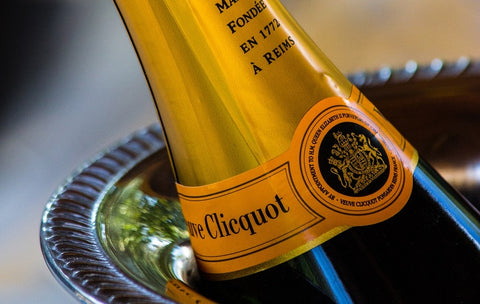
Out of the 145 bottles, 96 of them were found to be from the Juglar Champagne house (which closed down in 1829), produced in the same family that owns Jacquesson today. Another 46 bottles represented Veuve Clicquot – who was selling a lot of Champagne in the Baltic at that time – and were dated 1841-1850.
Last but not least, 4 bottles represented Heidsieck & Co.

Tasting Notes

Researchers began by comparing its chemical composition to that of modern champagne, and have found that they were very similar aside from a few notable distinctions. First off, the oldest Champagne bottles had around 20 times more sugar in their composition (150 grams per liter) – a characteristic of people’s tastes at the time.
Secondly, the Champagne contained higher concentrations of iron (likely because of the different wine vessels that were used at that time, which contained metal), copper and table salt as compared to modern wines.
All of this has resulted in a sweet taste, with an aroma “of mature fruit, with yellow raisin tones and a considerable hint of tobacco”, a clear acidity to back up its sweetness, and “an extremely clear flavour of oak cast storage.”
Even though incredibly old, there was also “a freshness about the wine” – according to sommelier Ella Grüssner Cromwell-Morgan, who sampled the very first bottle that was brought from the wreck.
Additionally, the chemist who studied the wine’s composition was only allowed to drink 0.1 millimetres. Even so, he noted that the quantity was “adequate” and that the Champagne was great – “It was amazing. It had a tobacco aroma. It was such a great moment,” he said.

Oldest Champagne Bottles On Auction

At the first auction in 2011, a Juglar bottle was sold for €24.000, while a Veuve Clicquot bottle fetched €30.000. The latter set a new record over the previous $84.700 from 2008 held by two bottles of 1959 Dom Perignon Rosé.
In May 2012, 11 more bottles were auctioned in Mariehamn, Finland (close to the original location where the bottles were found) for $156.000. A Veuve Clicquot was the highest priced bottle, fetching €15.000 itself.

Back To Modern Times

The shipwreck was a great find, attached to it an opportunity to discover the depth of a previously missing piece of history. In modern times however, we have the chance to make our own history, with our own modern and reputable Champagne houses.
Three of our favourite history-making bottles include:
  1. This Krug, 1996 – an incredible Champagne house with a track record of producing some of the world’s best Champagnes.
  2. This Louis Roderer Cristal, 2005 – today one of the only still independent Champagne houses, it produces this famous Champagne Cristal.
  3. This Taittinger Comtes de Champagne Rose, 2005 – the flagship wine of the Taittinger Champagne house, a Maison de Champagne with a rich, globally recognized spanning over 280 years.
Great for collectors and drinkers alike, you are guaranteed to find a label that will suit your taste among our collection.

Make Your Pick

You can find all of these amazing wines – and more – in our collection of world-class labels at the Moncharm wine shop.
Please take a moment to look through our selection, and if there is anything we can help with or for any questions or queries, please feel free to give us a call or write us a quick message. Our experts will respond promptly, and will gladly jump in to help!
Image source: Flickr
Facebook,Twitter,Linkedin,Pinterest,Google+,Moncharm


Saturday, 16 January 2016

Wine Aromas: Where Do They Come From? – Moncharm Fine Wine Merchants


Wine Aromas: Where Do They Come From?


Fine Wine Blog Wine Aromas Wine Flavours Wine Tasting


The wine aroma wheel, as seen on SA Uncorked (click here to enlarge)

If you’re a fellow wine lover who likes to read tasting notes, we’re certain you’ve repeatedly stumbled upon various descriptions such as "the complex bouquet is rich with notes of earth; black fruit and lead pencil interwoven in notes of minerals and oak wood.”
Many beginners that discover their newfound love for fine wine are often left wondering. What does this description mean? Where did these wine flavours come from? Did they actually blend black fruit into this wine? And what on Earth does “earth” mean?
In today’s article we will demystify wine aromas. You’ll learn where they come from, what they mean, and how you can identify them yourself the next time you taste wine. Let’s get started!

Where Do Wine Aromas Come From?

First of all, it’s important to note the difference between a wine’s aromas and a wine’s taste. The wine aroma has everything to do with our sense of smell. The wine taste has everything to do with the various senses inside our mouth. Combined, they result in wine flavours.
Because a very important part of the wine tasting experience happens inside our nose, extensive research has been conducted over the years to better understand how the wide variety of wine aromas come to be.
In short, wine aromas are the result of hundreds of different compounds (including alcohols) that combine to give a wide variety of unique perceived aromas. Because when we drink wine we might feel a strawberry texture combined with a slightly sour taste in our mouth, and a sweet smell in our nose, our brain is likely to put the pieces together and tell us we’re tasting strawberries.
The compounds that give a wine’s aromas differ for every wine, and they are influenced at 3 stages.

1. The Grape Growing Process

Known as primary wine aromas, they’re influenced by the type of grape used, as well as the environment that it grew in. Aromas in this group include earth (petroleum, red beet, volcanic rock, etc.), fruit, herbal, spice, and others.
An earthy vintage that bursts onto the palate with dark fruits, this Ch. Pontet Canet, 2006 is a sublime example that takes its aromas from a blend of Cabernet Sauvignon, Merlot, Cabernet Franc and Petit-Verdot.

2. Fermentation

Known as secondary wine aromas, they’re influenced by the fermentation process – which involves yeast and other microbes. Fermentation induced aromas include mushroom, truffle, lager, butter, cream, and others.
A great example of a Champagne well known for its creamy, fermentation induced aromas accompanied by a lively explosion of fruity notes is this Taittinger Comtes de Champagne Rose, 2005.

3. Aging Process

Known as tertiary aromas (or the wine’s “bouquet”), they are the result of aging (time spent in bottles or oak barrels, as well as oxidation). Aromas derived from general aging include tobacco, coffee, and dried fruit. Aromas derived from oak aging include vanilla, smoke and coconut.
This Tignanello, 2008 is one of our favourite Super Tuscans, and a masterpiece known for its persistent smoke and tobacco bouquet, accompanied by notes of black cherries.

Wine Aromas In Practice

You can use the directions in this article to pin down your own personal preferences in wine aromas!
By taking note of what you feel the next time you have your favourite wine, you’ll begin to develop your personal flavour profile. This will allow you to explore new wine varieties that have subtle similarities to wines you already know you like, taking the guess work out of the equation.
And in the meantime, why not take a look through our online wine shop? We feature a rare selection of the world’s finest wines, each with its own set of aromas waiting to be discovered!
Facebook,Twitter,Linkedin,Pinterest,Google+,Moncharm

Thursday, 14 January 2016

How Long Does Wine Last After Opening? – Moncharm Fine Wine Merchants


How Long Does Wine Last After Opening?


Fine Wine Blog How Long Does Wine Last After Opening how to preserve wine Wine Tips

A quality wine can last in a cellar for years, even a lifetime, and is an investment in future enjoyment. But what about the bottle that is opened, and cannot be finished in one sitting? It would be a waste to throw it away, especially if it was exceptionally enjoyable.

How Long Does Wine Last After Opening?

Luckily, pretty much any wine can last at least one day uncorked, if stored in a chiller or a refrigerator. Most white wines can last up to 3 days, and red wines for up to 5 days, if kept in a cool and dark place.
Some smartly purchased and stored red wines can even last for up to two weeks after opening – keep reading for our best tips on achieving this.

Tell-Tale Signs of Bad Wine

If gone off, both white and red wines will give an unpleasant and unusual smell. Red wines will turn slightly darker, with a brownish tint. White wines may turn more yellow or darker as well.
The smell and taste sense should be trusted – if in doubt, you should either throw the wine out or keep it for cooking. Wine can be used for cooking even after a few months from opening.
If you ask us, however, it would be a pity to resort to making Bordeaux pasta – so let’s take a look at how to make the wine last longer after opening!

Maximizing Uncorked Wine Longevity

Several measures can be taken to improve the quality of an opened wine, increasing its lifetime before spoilage.

1. Seal Off Air Flow

As soon as you’ve stopped drinking it, re-cork the bottle immediately. Exposure to air begins the deterioration, so the sooner air flow can be stopped, the better.
If the cork has unfortunately broken, and another stopper is not available, a bit of plastic wrapping over the top of the bottle (sealed tightly with a rubber band around the neck) is a good secondary option.
Alternatively, wine preservers can be used to ensure open wine is exposed to as little air as possible, which will help it stay fresh for noticeably longer.

2. Keep It Cool

After opening, all wines should be kept cool. For red wines, a wine chiller is the best option. If you don’t have one available, placing the bottle in the refrigerator is sufficient. An hour before serving, take the red wine out so that it can warm to room temperature for drinking.
The same stays true for white wines, but they can be served chilled.

3. Choose Your Wine Wisely

If known in advance that a wine will not be finished the night of opening, a conscientious buyer can choose the appropriate wine type for his drinking habits.
Full bodied wines (for example this Chateau Talbot, 2009) keep their flavour longer than lighter wines. And, in general, the more tannins and acidity a wine has, the longer it will last open.

Our Final Tip

A white wine usually lasts 1-3 days after opening, while a red wine can last 3-5 days. To maximize the quality and flavour of an opened wine, make sure to re-cork it as soon as possible, and keep it in a cool and dark place. Full bodied, high tannin and acidity wines will last longer than lighter, mellower wines.
But please take our final tip at heart and never open a truly rare bottle unless you know you have the time and state of mind to truly enjoy it until the very last drop :)
For more of the best, finest wines in the world today, have a look through our online wine and champagne shop. For any other fine wine related questions or queries, please feel free to contact us – we respond promptly!
Image source: Pixabay
Facebook,Twitter,Linkedin,Pinterest,Google+,Moncharm

Wednesday, 13 January 2016

Types of Wine Glasses: How to Pick The Ideal One For Your Fine Wine – Moncharm Fine Wine Merchants

Types of Wine Glasses: How to Pick The Ideal One For Your Fine Wine – Moncharm Fine Wine Merchants


Types of Wine Glasses: How to Pick The Ideal One For Your Fine Wine


Fine Wine Blog Fine Wine Glasses Specialty Wine Glasses Types of Wine Glasses


The different types of wine glasses available today differentiate themselves by means of size, shape, style, material used, and sometimes even colour. All of these characteristics make each type of wine glass unique in its own right.

Far more than simple aesthetics, a wine glass’s attributes can contribute or detract from the enjoyment of fine wine. In this article, we discuss important parts of the different types of wine glasses, helping you pick the right one for the right occasion.


Types of Wine Glasses: Parts

Apart from their differences, all wine glasses have 4 common parts. The stem is present on all glasses, aside from the modern stemless versions, and allow the glass to stand up while balancing the bowl. The stem of the wine glass allows you to hold your wine without warming it, and prevents smudges on the bowl.

The bowl is the part which has the most differentiation between glasses, and is the most essential – as it holds your wine, in addition to allowing surface area for the wine to breathe (in varying amounts). The rim is the second most important part, and allows you to drink the wine.


Types of Wine Glasses: Materials

The choice of material in creating the wine glass might be plastic, glass, or crystal, which all have their benefits and negatives. While plastic is the cheapest and least enjoyable material, it’s a perfect choice when glass cannot be allowed, such as the beach or at the pool.

Glass is the most common material, representing the balance between cost and quality. Crystal is the highest quality, for the best and most enjoyable wine-drinking experience, but can be quite expensive it is, however, the go-to material for your fine wine.


Perfect Glasses for Red Wine

Red wine should be served at or just below room temperature, in large wine glasses. The bowls of the glass should be more full and more round, in order for your nose to enter the bowl to experience the aroma.

The larger bowl size should also have a larger opening, as red wine needs a larger surface area, so that more wine can come into contact with air to breathe.

The Bordeaux glass is specifically for full bodied, heavy red wines. It is taller and with a slightly smaller bowl, to allow the wine to go directly to the back of the throat, in order to maximize flavour. Full-bodied red Bordeaux such as this Chateau Talbot, 2009 should always be drank from this type of wine glass.

The Burgundy glass is for full bodied yet light wines. It is shorter than the Bordeaux glass, but with a larger bowl. This allows the wine to touch the tip of the tongue, to enjoy the light wine’s more delicate flavouring. This Domaine Comte de Vogue Musigny, 2008 is a perfect example of a fine wine that goes neatly with this type of wine glass.


Perfect Glasses for White Wine

The glass for a white wine should be more upright and thinner than a red wine glass, as a cooler temperature needs to be maintained.

Young white wines should be served in a glass with a larger opening for lighter flavour tasting on the tip of the tongue, while mature white wines should be served in a glass that is straighter and taller for tasting the bold flavours on the back of the tongue. This Chateau d’Yquem, 2002 is a great example for this type of wine glass.


Specialty Wine Glasses: Champagne & Rose

While most wines are served in a red wine glass or white wine glass, some special occasion wines are best in a glass of their own.

The Champagne flute, for example, is more upright and narrow than the rest of the wine glasses, in order to keep the “bubbles” alive for as long as possible, and to hold the flavour for longer periods as well. Champagne Crystal is one of our favourites, and the ideal beverage to be enjoyed from such a glass.

Rose wines such as this Marchesi di Barolo Riserva, 2004 should be served in a glass with a short bowl. A glass with a slightly flared lip is best for young and crisp wines, while more mature wines should be serviced in a glass with a slight taper.


Maximizing Wine Enjoyment

The discerning wine lover should choose the most suitable wine glass to maximize their fine wine’s flavour and overall drinking experience. With different types of wine glasses that go ideally with their own types of fine wine, it’s important to know which one to choose for your specific bottle.

All of the fine wines mentioned in this article can be found in Moncharm’s online wine shop, along with the rest of our fine wine collection that brings together some of the best names from around the world.

Take a moment to check it out by clicking here – and please feel free to contact us for any fine wine related questions or queries! Our experts will reply promptly, and will be glad to help!

Image source: Flickr
Facebook,Twitter,Linkedin,Pinterest,Google+,Moncharm

Monday, 11 January 2016

Top 6 Award-Winning Wine Bars From Around The World – Moncharm Fine Wine Merchants

Top 6 Award-Winning Wine Bars From Around The World – Moncharm Fine Wine Merchants


Differing by thousands of miles in location, style, and offerings, this collection of the best wine bars from around the world have one thing in common: fine wine excellence.

From the quality of wine available, to the service provided and the surrounding atmosphere, each best wine bar provides a unique yet outstanding drinking experience that is guaranteed to impress even the most pretentious of wine lovers – regardless of the continent they’re on!

Without further ado, here are our favourite 6 fine wine bars from around the world.

1. Gordon’s (Best Wine Bar – Europe)

Gordon’s Wine Bar of 47 Villiers Street, London, holds the distinction of being the oldest wine bar in the capital. Open for over 125 years (for 363 days a year), Gordon’s may well be the most experience-backed wine bar in the world. With a wide variety of fine wines on offer (and over 20 types of cheese to pair with it), the bar is an excellent choice for tastings or dinner.

It takes pride in having something to offer every customer of every style. Rudyard Kipling was a famed patron, and is the one who wrote “The Light That Failed” in the room above the bar. Many other famous writers continue to frequent and enjoy the bar’s offerings.

2. Covell (North America)

Covell of Los Angeles, California is more laidback than the other wine bars on our list – however it is the very casual environment of this venue that allows fine wine to truly shine.

Run by Dustin Lancaster and Matthew Kaner (named Sommelier of the Year 2013 by Food & Wine), the bar offers 150 unique wines by the glass (and no wine list), with food to accompany. It was listed one of America’s top 100 wine bars.

3. The Symposium (South America)

The Symposium of Rio de Janeiro, Brazil, specializes in South American red wines, as well as some European labels too. The bar is located in a restored and preserved heritage mansion, and is a regular location for courses and wine tasting, in addition to private wine sampling and enjoyment.

4. Harry & Frankie (Australia)

Located on Bay Street of Melbourne Bay, Harry & Frankie is a dual purpose location: it is one of our favourite wine bars, but a wine shop as well. It offers over 600 local Australian and international wines for tasting at the bar, or purchasing to enjoy at home.

If choosing to imbibe at the bar, there is a delectable menu of a constantly changing two course dinner with share plates and tasters throughout the day. Owned by friends John Tennent and Tom Hogan (previously Sommelier at Lake House and Langton’s), the bar is family-themed.

The partners seek to promote wine’s three (equally important) tasks: be delicious, cause and accompany celebration, and dig deeper into the story behind each fine wine label. With a focus on the “behind the scenes” of fine wine labels (producers, regions, and grapes used to make the wine), this bar is truly a wine lover’s paradise.

5. The Riedel Room (Asia)

The Riedel Room at Q88 in Hong Kong provides not just a variety of wines, but a variety of wine glasses as well.

With a room specifically dedicated to wine glassmaker Riedel (the only such room in the world), the bar offers over 100 different types of glassware for wine enjoyment. Located at the luxurious JW Marriott and open for both lunch and dinner, the Riedel Room requires reservations in advance.

6. Belthazer (Africa)

On the V&A Waterfront of Cape Town, South Africa, the Belthazer Restaurant and Wine Bar is said to be the largest wine-by-the-glass bar in the world.

With over 250 wines available for ordering by the glass, Belthazer surely has something to please every palate. Both the food and the wines are highly awarded, including the Wine Spectator Award of Excellence (for 3 years in a row) and the American Express Fine Dining Selection award.

Too Far Away?

If you find yourself too far from your favourite wine bars, or if you simply prefer to enjoy fine wine within the comfort of your house, you can always order a fine label online!

Moncharm’s online wine shop (click here) provides a wide range of some of the world’s best and most renown fine wines (think Bordeaux, Burgundy, and Super Tuscans) – all delivered right to your doorstep!

Please take a moment to check it out, and feel free to contact us at any time if you have any questions or queries. Our fine wine experts respond promptly, and will gladly jump in to help!

Image source: Pixabay

Friday, 8 January 2016

Michelin Wines: Quick Guide to Award-Winning Restaurant Wines – Moncharm Fine Wine Merchants


Michelin guides have been published for over one hundred years, and are considered the premier indicator of restaurant quality to the public. Differing from services such as Zagat and Yelp which rely on guest feedback, Michelin employs full time, professional reviewers.
Michelin wines are the fine wines served in Michelin restaurants, highly regarded as some of the world's best.
The star rating of a restaurant has enormous effects on its success. Gaining a star (or being added to the list) is a highly celebrated occasion which sees an influx of guests, while losing a star can be disastrous. As French chef Paul Bocuse, a king of nouvelle cuisine stated, “Michelin is the only guide that counts.”

What Are Michelin Stars?

A huge majority of restaurants receive no stars at all (approximately 95% of those reviewed), among which even well-known and reputable ones. If a restaurant is lucky (and excellent) enough to be included in the official Michelin list, it will be rated on a scale from one to three stars.
One star indicates a very good restaurant recommended in its category, with dishes prepared to a consistently high standard. Two stars are for restaurants with excellent, skilfully and carefully crafted dishes (as well as served beverages) of outstanding quality.
Three stars are extremely rare and reserved for restaurants worthy of a special journey, with exceptional, superb dishes that are precisely executed with only the most rare and outstanding ingredients.

Michelin Wines

The Michelin-starred restaurants are also highly regarded for their offer of some of the finest wines, with the uniting principle being quality. Most boast extensive, detailed offerings, with several of the best vintages of each wine available for the discerning consumer.
Restaurant Daniel from New York (two Michelin stars), for example, has an extensive 44 page wine list, including of the Domaine Armand Rousseau variety – one of the most revered wine estates from the Burgundy wine region.
The Ledbury from London (two Michelin stars) is another example with its own lengthy list, at 40 pages. Château Lynch-Bages and Chateau Pavie are some of our favourite wines on the menu, among many other highly regarded vintages.
Tom Aikens (who at 26 was the youngest British chef to ever be awarded 2 stars), on the other hand, bucks the trend and prefers a more concise and carefully curated list. He even offers a special Biodynamic wine on his short 2-page list.
For champagne, most Michelin stared restaurants will have on offer Moet & Chandon Dom Perignon, as well as the legendary Champagne Cristal.

London's Michelin "Bring Your Own" Wines

A few years ago, over 50 Michelin-starred restaurants joined the Bring Your Own (BYO) Wine Group, beginning to allow members to bring their favourite wines to their favourite restaurants at no charge (or at maximum a modest corkage fee).
Diners benefit from Bring Your Own, as they can avoid confusion caused by overly long wine lists – instead focusing their attention on the food menu. Enjoying a much-beloved wine brought from home that you already tasted and know you like has greatly enhanced the dining experience.

Buying Michelin Wines

If you’d like to take advantage of the increasingly popular “Bring Your Own” initiative in London, or if you'd simply prefer to enjoy fine wine at home, please take a moment to check our fine wine shop.
There we have featured a collection of the world’s best fine wines and champagnes – all ready to be delivered right to your doorstep.
Additionally, if you have any fine wine related questions or queries, please feel free to contact our experts. We always respond promptly, and will be glad to help!
Image source: Skitterphoto